Table of contents
Who keeps a Paris hotel running while the city sleeps, and why does that invisible workforce matter more than ever as tourism returns to pre-pandemic rhythms? Behind the lobby smiles and the quiet corridors, schedules, supply chains, and labor shortages collide with guests’ expectations of seamless comfort, and in a city where occupancy has rebounded strongly since 2022, the backstage has become the real frontline. In Paris’s 13th arrondissement, the Hotel Urban Bivouac Paris offers a telling case study of how a 3-star property, plugged into public transport, is reorganizing daily work to keep service steady.
Before dawn, the hotel already works
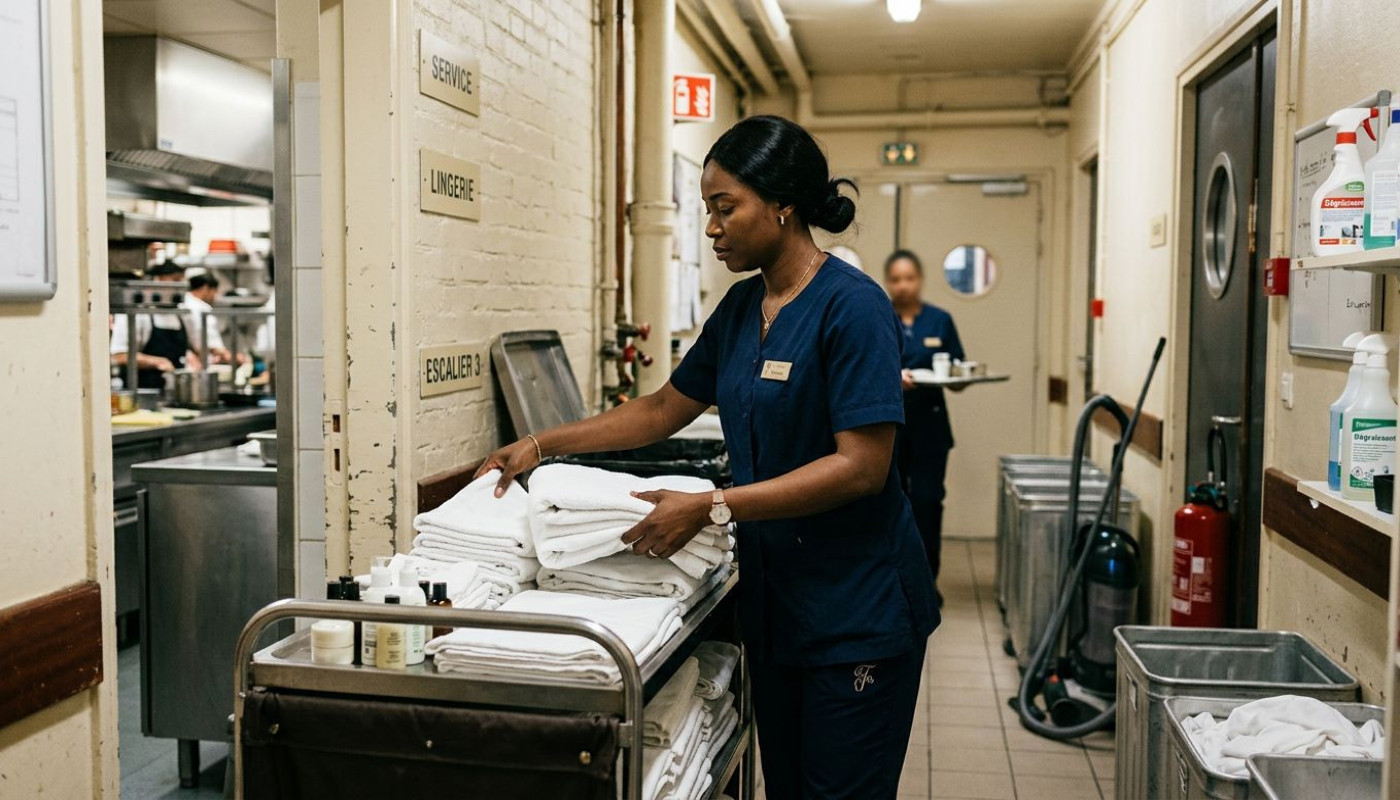
At 5:30 a.m., Paris is still dim, yet the hotel is already in motion, and not in the way guests imagine. Deliveries arrive early because traffic is lighter and because logistics windows have tightened across the city, with suppliers attempting to cut costs and emissions by consolidating routes, and with hotels adapting to shorter lead times for basics such as linens, toiletries, and breakfast staples. In many French hotels, housekeeping remains the largest operational expense, often representing around a quarter to a third of staffing needs depending on service level, and it is also the department most exposed to recruitment difficulties, sickness absence, and last-minute room-turn pressure when trains, flights, or conferences shift arrivals.
In a 3-star context like Hotel Urban Bivouac Paris, the promise is not luxury theatre but reliability, cleanliness, and speed, and that promise is delivered by a choreography most guests never see. Rooms are sequenced by departure time, by the likelihood of same-day resale, and by the constraints of laundry capacity, and those constraints are shaped by broader market forces: energy prices that surged in Europe after 2021, water costs, and the simple arithmetic of running washing cycles while staying within efficiency targets. The invisible workforce makes dozens of micro-decisions, whether to prioritize a family room needed at 1 p.m. or a late check-out requested by a business traveler, and each decision has downstream impacts on reception, maintenance, and guest satisfaction scores.
The morning handover is where pressure concentrates, because the front desk must transform operational reality into calm assurance. A delayed train can push check-ins into a tight cluster, a large group can overwhelm elevator flow, and a single broken bathroom fixture can block a room from sale, cutting revenue instantly. Hotels increasingly rely on preventive maintenance routines rather than emergency fixes, yet those routines require time that is hard to protect when occupancy is high. What looks like a simple “ready room” promise is, in fact, an hour-by-hour negotiation between housekeeping staffing, technical checks, and the day’s arrival curve, and the workforce behind the scenes absorbs the volatility so the guest experience looks effortless.
Recruitment crunch meets rising expectations
Can you run a hotel smoothly if you cannot hire fast enough? Across France and much of Europe, hospitality employers have faced persistent recruitment strains since the pandemic, and the challenge is not only headcount but also experience, training time, and retention. Industry bodies and public statistics have repeatedly highlighted tensions in hotel-café-restaurant hiring since 2021, with many establishments reporting difficulty filling vacancies, and in practice that translates into fewer buffers when demand spikes. In a city like Paris, where international visitors returned in force and major events keep calendars dense, a lean roster can quickly become a risk to service consistency.
That is where organization, and not just staffing, becomes the differentiator. A 3-star hotel’s guest expects fast Wi‑Fi, quiet nights, and a room that feels as if no one has ever been there before, and those expectations are shaped by platform reviews that compress nuance into a few lines. The back-of-house response is increasingly data-driven, even in smaller properties: cleaning times are measured, the frequency of technical incidents is logged, and recurring complaints are categorized so managers can fix root causes rather than apologize repeatedly. The invisible workforce is not only manual labor; it is also planning, procurement, and quality control, and it often includes multilingual coordination because teams are diverse and because guests’ needs are not expressed in one language.
At Hotel Urban Bivouac Paris, the Paris 13e setting brings its own mix of profiles, from business travelers moving between meetings and public institutions to leisure visitors who want access to central Paris without paying the highest prices of the most touristic districts. That mix affects workflow, because business guests compress demand into weekday peaks and early departures, while leisure arrivals can be more spread out and more likely to ask for local guidance. The workforce behind the scenes must be flexible, yet flexibility has a cost, and hotels have been experimenting with more predictable shifts, cross-training between reception and service tasks, and clearer career pathways to reduce churn. It is less visible than a renovated lobby, but it is often more decisive for guest outcomes.
In the 13th, mobility shapes the workload
Location is not just a marketing line; it changes the tempo of a hotel’s day. In Paris, proximity to public transport influences arrival waves, late check-ins, and the proportion of guests who travel light, and those factors shape staffing needs. When a hotel is close to metro and bus links, guests are more likely to arrive in concentrated bursts after train connections, and they are also more likely to drop bags early and return late, which stretches the front desk’s “quiet hours” into a longer service window. The Hotel Urban Bivouac Paris, positioned in the 13th arrondissement and known for being close to public transport, illustrates how mobility can be both an advantage and an operational challenge.
For guests, transport access reads as freedom: less reliance on taxis, faster movement across the city, and the ability to build days around museums, concerts, or meetings without obsessing over travel time. For staff, that same access can mean a more variable flow. The lobby may see a surge after a delayed metro line, and a wave of guests may return at once after an evening event, and the hotel must maintain calm, security, and responsiveness through those surges. In practice, this affects everything from night audit routines to elevator wear, and even the scheduling of small maintenance tasks that require temporary noise or service interruption.
The 13th arrondissement adds another layer, because it is a district with a strong mix of residential life, university and hospital ecosystems, and a growing pull for travelers who prefer a less postcard-heavy version of Paris. That can make a 3-star hotel’s role more anchored in practical hospitality, offering a stable base rather than a curated fantasy. Staff are then asked not only to deliver room standards but also to function as navigators of the city, explaining the most efficient routes, the best times to travel, and the small neighborhood cues that help visitors feel oriented. Those interactions look casual, yet they require local knowledge, training, and time, and they are part of the invisible labor that turns transport proximity into a real guest benefit.
What guests never see still costs real money
What is the price of an invisible job well done? Behind-the-scenes work is where a hotel’s budget is won or lost, because small inefficiencies multiply across rooms, days, and seasons. Laundry and linen management, for instance, is a major line item, and it is sensitive to energy prices and to occupancy patterns; a single extra change of towels per stay, multiplied by hundreds of rooms per month, becomes a material cost in water, detergent, electricity, and labor. Preventive maintenance is similar: replacing a part before it fails costs money upfront, yet it can prevent lost room nights, emergency call-outs, and the reputational hit of a negative review that deters future bookings.
For a 3-star hotel, value is the product, and value depends on consistency. Guests may forgive a smaller room more easily than a room that is not ready, a heating issue, or noise at night, and that puts pressure on systems that are largely unseen. Managers increasingly monitor key indicators such as occupancy rate, average daily rate, and revenue per available room, but those commercial measures depend on operational ones: room turnaround time, technical incident frequency, and complaint resolution speed. When the invisible workforce is under strain, the commercial metrics follow, and when the back-of-house runs smoothly, the hotel can defend its pricing without overpromising.
Hotel Urban Bivouac Paris benefits from being a Paris 13e address with strong transport access, because that can widen the potential guest pool and reduce friction for travelers who plan to move around the city, yet the economic reality remains that Paris is a high-cost environment for staffing and utilities. The trade-off is managed through process: tighter inventory control for supplies, smarter scheduling, and a focus on the essentials that define a strong 3-star experience. In an era when travelers compare dozens of options in seconds, the invisible workforce becomes a competitive advantage, because it is the difference between a stay that merely happens and a stay that feels easy.
Planning your stay, without overpaying
For travelers, the practical question is simple: how do you book smart, and what budget should you expect? In Paris, prices fluctuate sharply by season, weekday, and event calendars, and booking earlier often improves the choice of room categories, especially when conferences or major cultural dates tighten supply. If you want a base that combines a Paris 13th arrondissement location, 3-star comfort, and proximity to public transport, Hotel Urban Bivouac Paris is the kind of address where comparing flexible versus non-refundable rates can make a meaningful difference, and where checking cancellation terms is as important as the headline price.
Budget-wise, travelers should plan beyond the nightly rate, factoring in local transport passes, breakfasts, and late check-out options when needed, and they should also look for public or employer-backed supports that may apply to certain profiles, such as business travel policies or, for eligible visitors, mobility-related discounts offered through transport operators. The simplest money-saver often remains strategic timing: mid-week in shoulder seasons can be calmer and more affordable, while peak periods require earlier reservations to avoid paying a premium for last-minute availability.
Similar articles
What Landlords Wish Renters Understood About Cancellation Policies

Deciphering the Impact of Cryptocurrency on Global Economy

Cryptocurrency: Unmasking the Future of Finance

Cryptocurrency: The Future Powerhouse of the Global Economy
